
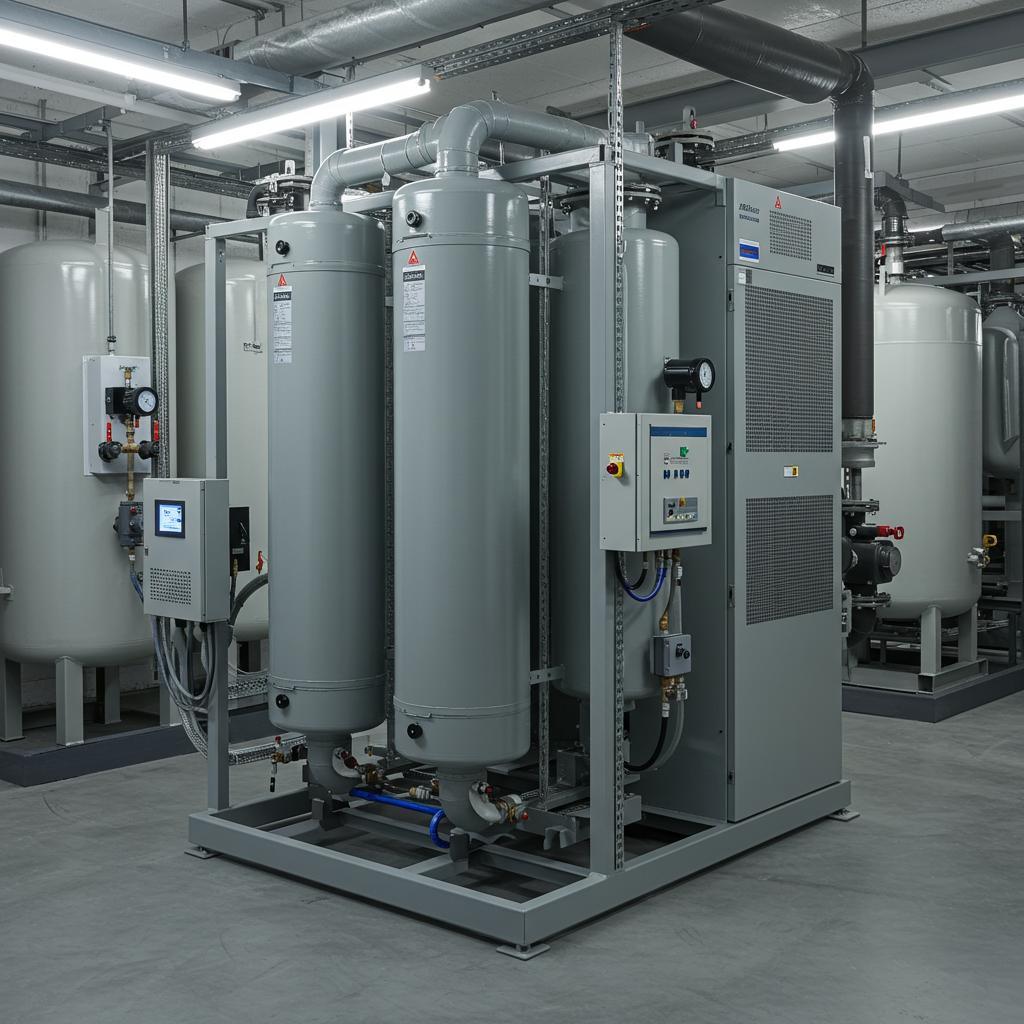
Industrial air compressors keep production running, and a short daily air compressor maintenance routine is the most reliable way to catch problems before they cause unplanned downtime. Facility operators who follow a consistent daily air compressor maintenance checklist protect equipment, control energy costs, and support the work of qualified service technicians. As an Authorized Atlas Copco Distributor, CED Compressed Air builds preventive maintenance programs around the same principles covered in this guide: routine observation, accurate records, and prompt reporting of anything unusual.
The Daily Inspection Sequence
A practical daily inspection takes only a few minutes once it becomes part of a shift routine. Operators should follow manufacturer instructions and workplace safety procedures throughout, and complete the sequence before the compressor runs a full production cycle:
- Check oil level and condition on oil-lubricated units.
- Inspect the air filter and intake area for restriction or contamination.
- Record discharge pressure and operating temperature.
- Listen and look for air leaks at accessible hoses, fittings, and piping.
- Confirm that condensate drains are cycling correctly.
- Note any unusual noise, vibration, or active alarm.
Oil Level and Lubrication Checks
Oil-lubricated compressors depend on adequate lubricant volume and condition to protect internal components from friction and heat. Operators should check the oil level against the sight glass or dipstick specified in the manufacturer’s manual, following the manufacturer’s recommended inspection method and interval.
Warning signs include a low oil level, cloudy or discolored lubricant, a milky appearance that suggests moisture contamination, and oil consumption that increases faster than normal operation would explain. Oil-free compressors do not require this check, so confirming which lubrication type a unit uses is an important first step when building a checklist.
Air Filter and Intake Condition
Restricted air intake forces a compressor to work harder, raising energy consumption and operating temperature. A quick visual inspection of the air filter housing, along with any restriction indicator fitted to the unit, shows whether airflow is compromised.
A filter that appears visibly dirty, discolored, or damaged needs appropriate maintenance or replacement rather than continued use. Keeping intake air clean protects internal components and supports the compressed air quality that downstream processes depend on.
Pressure and Temperature Monitoring
Daily readings of discharge pressure and operating temperature, compared against the manufacturer’s recommended operating range, give operators an early indication of developing problems. A reading that drifts outside normal range, even gradually, often points to a fault that has not yet caused a visible failure.
Recording these fluctuations allows a maintenance team to investigate the cause, whether it is a clogged filter, a failing valve, or a cooling issue, before the compressor is forced into an unplanned shutdown.
Air Leaks and Connection Points
Compressed air leaks waste energy and reduce the pressure available to production equipment. A daily walk-around should include listening for audible hissing near hoses, fittings, and piping, and checking accessible connections for visible wear or looseness.
Any leak detection or repair involving pressurized components must follow approved safety procedures. Operators should report findings rather than attempt repairs on energized or pressurized equipment, keeping the system running at its intended capacity.
Condensate and Moisture Management
Compressed air carries moisture that collects in the receiver tank and must be removed to protect equipment and air quality. Operators should confirm that automatic condensate drains are cycling correctly and check for unusual moisture buildup or signs that a drain is not functioning.
A malfunctioning drain allows water to accumulate, corroding tank surfaces and contaminating downstream tools. Because manual draining involves pressurized components, any adjustment beyond confirming normal drain operation should be handled by a qualified technician following the correct isolation procedure.
Unusual Noise, Vibration, and Warning Indicators
Abnormal noise, excessive vibration, irregular cycling, or an active alarm all indicate that something has changed inside the compressor. These symptoms rarely resolve on their own and often signal a developing mechanical or operational issue.
For example, an operator who notices a compressor cycling more frequently than its usual pattern, paired with a slightly elevated discharge temperature on the daily log, can flag the trend for a technician before the unit experiences a more serious failure. Indicators worth reporting immediately include:
- Grinding, knocking, or rattling sounds during operation
- Vibration beyond what is normal for the installation
- Cycling that is noticeably more frequent than usual
- Any active alarm or fault indicator on the control panel
Daily Maintenance Documentation
Recording pressure, temperature, operating hours, alarms, and any unusual observations turns daily checks into a useful maintenance tool rather than a routine formality. Consistent records reveal performance trends that a single day’s reading cannot show.
A simple daily log should capture:
- Discharge pressure and operating temperature
- Total operating hours
- Any alarms, faults, or unusual readings
- Observations from the oil, filter, leak, and condensate checks
These logs give service technicians a clear history to reference during scheduled preventive maintenance visits and support condition-based decisions about when a compressor needs attention.
Connecting Daily Checks to Professional Servicing
Daily checks are not a substitute for scheduled preventive maintenance performed by qualified technicians. Maintenance requirements vary by compressor type, operating hours, duty cycle, and environment, which is why CED Compressed Air’s air compressor services – repair and maintenance programs are built around each facility’s specific equipment and usage.
Where fitted, Atlas Copco Smart Link monitoring can supplement operator checks by reporting operating data and maintenance alerts remotely, though it does not replace physical inspection of hoses, filters, and drains. Operators who identify an unusual reading or sound during a daily check should contact a qualified technician rather than attempting repairs that require component access, since this work must follow proper lockout/tagout and pressure-release procedures.
CED’s preventive maintenance programs and air compressor maintenance and repair guidance extend this daily routine into scheduled, documented service for industrial facilities.
Conclusion
A consistent daily air compressor maintenance routine gives facility operators an early window into developing problems, long before they affect production or trigger an alarm. These checks work alongside, not instead of, manufacturer-recommended preventive maintenance performed by qualified technicians. For help building a daily inspection routine or scheduling preventive maintenance for your industrial compressed air system, contact CED Compressed Air at +1 (905) 433-7043.
Frequently Asked Questions (FAQs):
Q. What daily checks should an air compressor operator perform?
A. A daily air compressor maintenance routine typically includes checking oil level and condition on oil-lubricated units, inspecting the air filter, recording pressure and temperature readings, listening for unusual noise or vibration, checking for leaks at accessible fittings, and confirming that condensate drains are operating correctly. Any unusual finding should be reported to a qualified technician for further assessment.
Q. How do I know if my air compressor’s oil level is a problem?
A. Low oil level, cloudy or discolored lubricant, a milky appearance suggesting moisture contamination, and oil consumption that increases faster than normal use would explain are all warning signs. Oil-lubricated compressors should be checked against the sight glass or dipstick specified in the manufacturer’s manual. Oil-free systems do not require this check.
Q. Why do air leaks matter for compressed air systems?
A. Even small compressed air leaks waste energy and reduce the pressure available to production equipment, affecting system performance over time. A daily check should include listening for audible hissing near hoses and fittings and looking for visible wear on accessible connections. Repairs involving pressurized components should follow approved safety procedures.
Q. How should condensate drains be checked during a daily inspection?
A. Operators should confirm that automatic condensate drains are cycling as expected and watch for unusual moisture buildups in the system. A drain that is not functioning allows water to accumulate in the receiver tank, leading to corrosion and contamination of downstream equipment. Adjustments beyond confirming normal operation should be handled by a qualified technician.
Q. What warning signs mean a compressor needs professional servicing?
A. Unusual noise, excessive vibration, irregular cycling, active alarms, readings outside the manufacturer’s recommended range, and leaks beyond normal operation all warrant professional assessment. These indicators often point to developing mechanical or operational issues. Operators should contact a qualified technician promptly rather than continue to run affected equipment.
Q. What is the difference between daily checks and scheduled preventive maintenance?
A. Daily checks are brief operator-level observations, such as reviewing readings, inspecting filters, and listening for abnormal sounds, that catch early warning signs between service visits. Scheduled preventive maintenance is performed by qualified technicians at intervals set by the manufacturer and compressor usage, including component servicing and parts replacement. Daily checks support, but do not replace, this scheduled servicing.