
Vibration analysis identifies bearing, gear, and rotor faults in rotary screw and centrifugal compressors before failure occurs. Each component produces a distinct frequency signature. CED Compressed Air Inc. builds this technique into preventative maintenance. Offsite monitoring programs, converting frequency-graph peaks and valleys into work orders that reduce unplanned downtime across GTA and Eastern Ontario facilities.
Key Takeaways
- Vibration analysis detects component failures early by monitoring frequency signatures of bearings, gears, and rotors.
- Regular vibration monitoring deployed throughout a compressor’s lifecycle prevents unplanned downtime and production losses.
- Every component generates its own detectable frequency that reveals mechanical degradation when properly analyzed.
- CED Compressed Air Inc., established in 1986, provides professional compressor installation and systems analysis in Ontario.
Why Does Vibration Signal Trouble Early?
Small mechanical shifts inside a compressor announce failure long before a breakdown occurs. Vibration analysis catches those shifts by measuring frequency changes across rotating parts, giving plant teams a window of warning that reactive maintenance never provides. Left unaddressed, that same vibration compounds into bearing wear, misalignment, and unplanned production stoppages.
The tool works best under a disciplined schedule. Deployed regularly, and ideally from the earliest days of a compressor’s service life, vibration monitoring builds a baseline that makes anomalies easy to spot. A single reading tells little; a trend line tells everything.
What Parts of a Compressor Does Vibration Analysis Track?
Ball bearings, gears, and rotors each generate a distinct, detectable frequency signature. Trained analysts compare readings against those signatures to trace an anomaly back to the exact component causing it, rather than guessing at the source of a fault.
How Does CED Compressed Air Apply This to Equipment Health?
CED Compressed Air Inc. builds systems analysis, including vibration monitoring, into its sales and service work on compressors, dryers, and related equipment. A focused, ten-person technical team carries this equipment health discipline across service calls in Eastern Ontario and the Greater Toronto Area, translating frequency data into concrete, prioritized work orders before failure interrupts production. For plant managers, that early signal protects both output schedules and repair budgets.
What Belongs In A Vibration Monitoring Program?
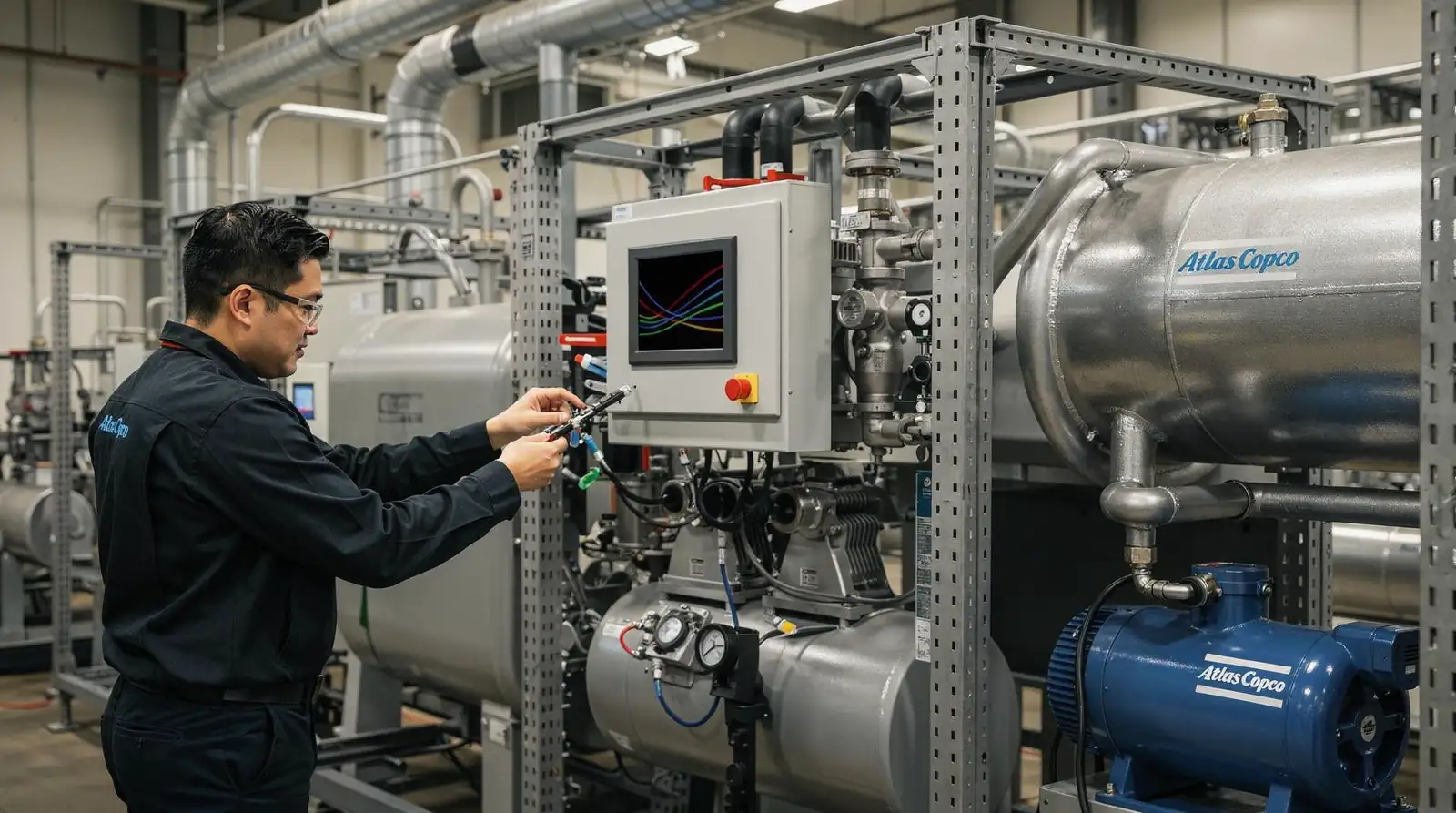
A working program needs three elements: correctly placed sensors, qualified technology, and a clear path from data to repair. Skipping any one of these turns monitoring into a checkbox exercise rather than a genuine defense against failure. Plant managers overseeing rotary screw and centrifugal systems need all three working together, not in isolation.
As a platinum distributor for Atlas Copco, CED Compressed Air Inc. gives clients access to advanced condition monitoring technology already built into modern compressor packages. That integration matters because retrofitted sensors rarely match the accuracy of factory-designed systems.
Where should sensors be positioned on a compressor?
Placement determines whether readings mean anything. CED Compressed Air Inc. handles professional installation, positioning sensors and monitoring points correctly from day one of a compressor’s operating life. Poor placement produces noisy data that masks real problems until they become expensive ones.
What makes vibration data trustworthy?
Instruments now deliver precision no technician can match through touch or hearing alone. Modern vibration analysis relies on this instrumentation to catch bearing wear, misalignment, and rotor issues long before they surface as audible knocks.
A complete program includes:
- Correctly positioned sensors tied to equipment health baselines
- Factory-integrated monitoring technology, not aftermarket guesswork
- A stocked parts supply chain, including Atlas Copco components, for fast repair once predictive maintenance flags an issue
How Do You Act On Vibration Data?
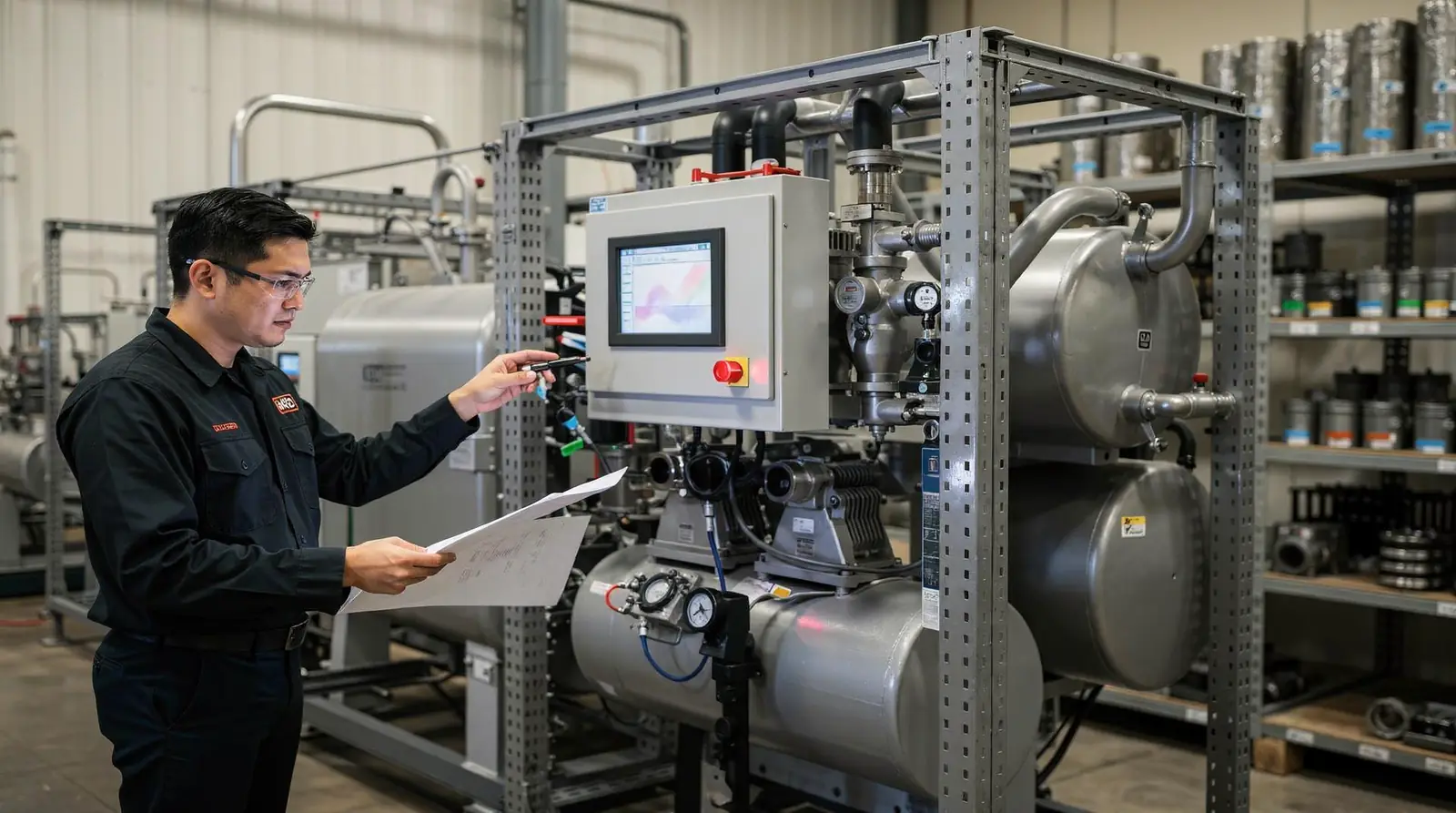
Flagged readings demand a decision, not a filing cabinet. Vibration analysis only pays off when it triggers a work order, a parts order, or a rental request before the compressor fails outright. For decades, plants leaned on run-to-failure repairs or rigid preventive schedules that replaced parts on a calendar regardless of actual condition. That approach no longer matches what modern reliability programs expect.
What happens if a flagged compressor keeps running anyway?
Compressed air ranks as a fourth utility alongside electricity, water, and natural gas. A single failed unit stops pneumatic tools and automated equipment cold, halting production directly rather than gradually.
What should a plant do once vibration data flags a problem?
Acting on the signal usually means one of three paths:
- Schedule repair immediately — pull the unit before bearing wear becomes a bearing failure.
- Bring in rental capacity — CED Compressed Air Inc. supplies air compressor rentals across Ontario, so operations continue while the flagged machine is serviced.
- Log the trend for equipment health tracking — feeding readings back into a monitoring plan sharpens future maintenance timing.
CED Compressed Air Inc. has applied this discipline since 1986, giving its technicians decades of practice reading vibration signatures correctly. Plant teams ready to build a predictive maintenance and monitoring plan can reach the company by email at [email protected].
Vibration analysis represents a cornerstone of predictive maintenance strategy for compressed air systems, enabling operators to detect emerging issues before they escalate into costly failures. By monitoring equipment condition through advanced diagnostic techniques, businesses optimize performance, extend asset lifespan, and reduce unplanned downtime. CED Compressed Air delivers the technical expertise. Systems analysis capabilities to implement vibration monitoring within your operational framework, supporting your commitment to reliability. Efficiency across Eastern Ontario and the Greater Toronto Area.
FAQ
Why does vibration analysis matter for compressor maintenance?
Vibration analysis identifies bearing, gear, and rotor faults in rotary screw and centrifugal compressors before failure occurs. Each component produces a distinct frequency signature, giving plant teams early warning that reactive maintenance never provides.
What components does vibration monitoring track?
Vibration monitoring tracks ball bearings, gears, and rotors, each generating a distinct, detectable frequency signature. Trained analysts compare readings against these signatures to trace anomalies back to the exact faulty component.
How does CED Compressed Air Inc. support vibration monitoring programs?
CED Compressed Air Inc. builds vibration monitoring into its sales and service work on compressors, dryers, and related equipment, handling professional sensor installation and systems analysis. As a platinum distributor for Atlas Copco, it also provides access to advanced condition monitoring technology built into modern compressor packages.
Facts
- CED Compressed Air Inc. is located in Oshawa, ON, CA.
- CED Compressed Air Inc. has 10 employees.
- CED Compressed Air Inc. was established in 1986.
- CED Compressed Air Inc. offers sales and service of air compressors, dryers, related equipment, and systems analysis.
- CED Compressed Air Inc. is a platinum distributor for Atlas Copco.
- CED Compressed Air Inc. can be contacted via email at [email protected].
- CED Compressed Air Inc. offers air compressor rentals in Ontario.
- CED Compressed Air Inc. provides professional air compressor installation services.
- CED Compressed Air Inc. sells a wide range of high-quality air compressor parts and accessories from brands like Atlas Copco.