
Remote monitoring for air compressors uses cloud-connected sensor technology, such as the Helix™ Connected Platform. Developed by Ingersoll Rand, not CED Compressed Air. To deliver real-time performance data and alerts directly to a PC, tablet, or smartphone. This continuous visibility identifies developing faults early, maximizes uptime, and supports energy-efficient operation across Ontario industrial and manufacturing facilities.
Key Takeaways
- Remote monitoring systems deliver real-time data visibility and performance insights for air compressors 24/7/365.
- Helix™ Connected Platform uses sensor technology to maximize uptime, quality, and energy efficiency simultaneously.
- SMARTLINK app provides quick access to operational status, manuals, and service history via mobile device.
- AIRGuard monitoring prevents compressor failure while maximizing facility efficiency through instant remote connectivity.
What Is Remote Monitoring for Compressors?
Remote monitoring gives plant managers real-time visibility into a compressor’s performance without a technician standing beside the machine. Data on pressure, temperature, energy draw, and runtime flows continuously from the equipment to a connected dashboard, turning a standalone air compressor into a smart, networked asset. For Ontario facilities running production around the clock, that visibility closes the gap between a normal reading and a failure in progress.
CED Compressed Air Inc. builds this capability into its core service model. Sales, service, and systems analysis for compressors and dryers form the foundation of what the company delivers to industrial clients across the province. As a platinum distributor for Atlas Copco, CED provides access to equipment engineered for connected performance tracking, not just basic operation.
How does this differ from a technician checking the equipment on-site?
Offsite monitoring removes the wait. Instead of scheduling a site visit to catch a slow pressure drift or an overheating dryer, data streams to a dashboard around the clock. Facility engineers see trends developing before they become breakdowns.
What keeps the monitoring accurate as technology evolves?
CED staff receive continuous training on current Atlas Copco technologies, including connected and monitoring-enabled systems. That ongoing training supports reliable system diagnostics, giving maintenance directors confidence that alerts reflect real conditions rather than false alarms.
How Does Offsite Monitoring Prevent Downtime?
Continuous data tracking stops small compressor issues from becoming costly shutdowns. Platforms like AIRGuard connect facility teams instantly, from anywhere, to real-time compressor data around the clock, catching warning signs before failure occurs. For plant managers across Ontario, that visibility replaces guesswork with hard information.
CED Compressed Air Inc. delivers offsite monitoring as part of a broader service portfolio spanning Eastern Ontario and the Greater Toronto Area. Preventative maintenance and installation work alongside monitoring to keep compressed air systems running at full capacity, not just patched together after a breakdown.
What happens when a problem is caught early?
Early detection through remote monitoring flags pressure drops, temperature spikes, and efficiency losses long before they force an unplanned shutdown. Maintenance teams can schedule repairs on their own timeline instead of scrambling during a crisis.
Does monitoring replace on-site service?
No. Monitoring works alongside hands-on support, not instead of it. CED backs routine maintenance with 24-hour emergency services, extending coverage beyond standard business hours for facilities that cannot afford idle equipment.
This layered approach reflects a broader philosophy: CED positions itself as an operational partner, not a transactional supplier. Ongoing system diagnostics give facility engineers:
- Real-time performance data accessible remotely
- Early warning of mechanical wear
- Fewer emergency callouts
- Reduced unplanned production stoppages
That combination protects both uptime and budget.
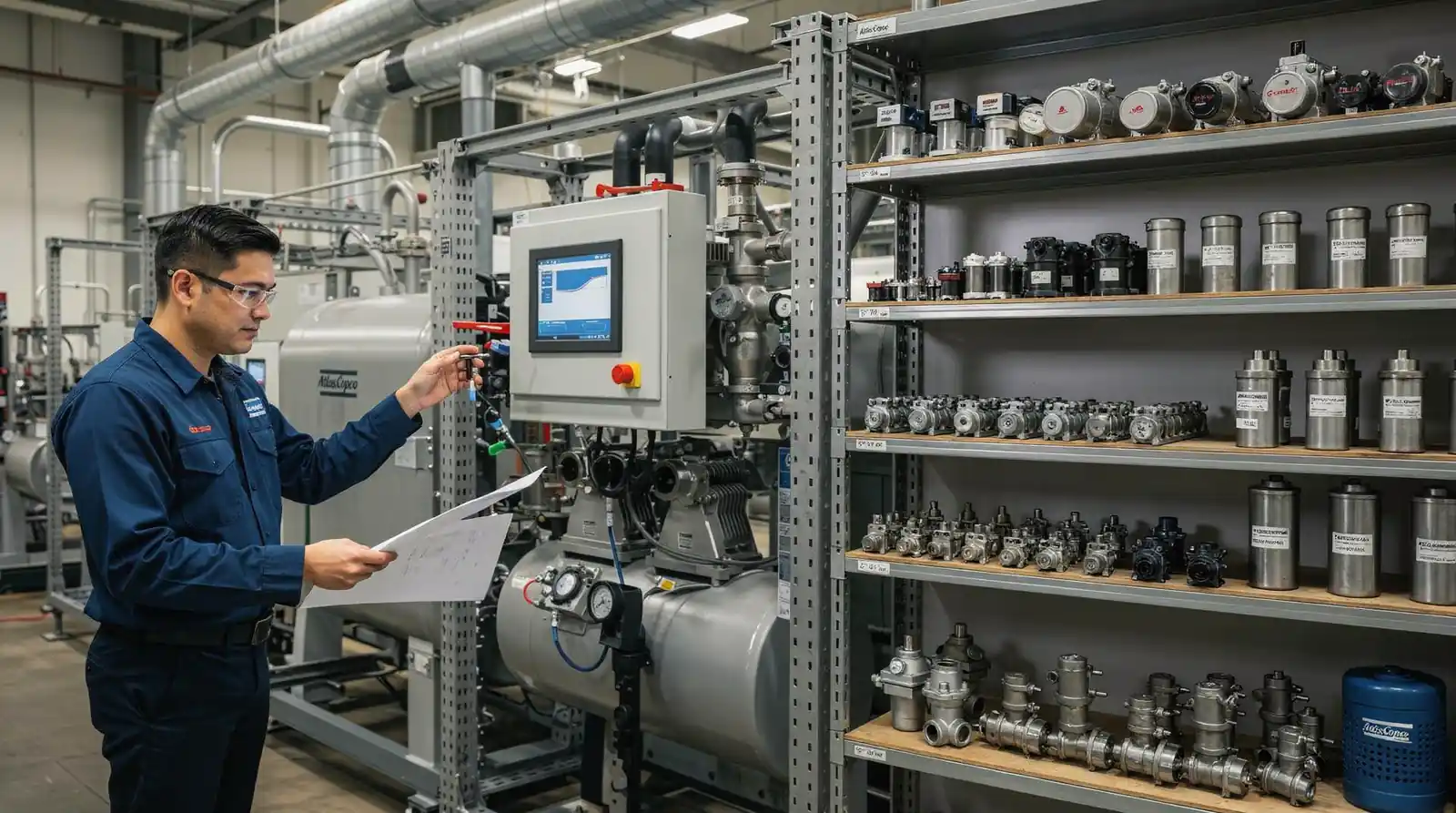
What Does System Diagnostics Uncover?
System diagnostics exposes hidden mechanical faults, pressure irregularities, and efficiency losses long before a compressor shuts down a production line. Facility engineers who rely on guesswork lose thousands of dollars in unplanned downtime each year; diagnostic monitoring replaces that guesswork with hard data. Accurate readings depend on a correctly installed system from the start.
Why does proper installation matter for diagnostic accuracy?
CED Compressed Air Inc. provides professional air compressor installation services that establish the baseline conditions diagnostics rely on. A poorly installed unit generates false pressure readings and misleading temperature data. Correct setup ensures sensors capture true performance from day one, not distorted noise.
What tools reveal compressor problems before failure occurs?
Diagnostic platforms such as SMARTLINK give maintenance directors quick, mobile access to operational status alongside compressor manuals and service history. That combination lets plant teams spot recurring fault patterns rather than reacting to isolated alarms. Meanwhile, offsite monitoring built on IIoT technology — smart sensors and cloud dashboards. Converts reactive maintenance into proactive insight, lifting uptime and cutting energy costs.
Diagnostics also inform parts decisions. CED Compressed Air Inc. sells a wide selection of genuine Atlas Copco parts and accessories. Once diagnostics flag a worn component, replacement happens with the correct part, not a generic substitute. That precision shortens repair time and protects long-term reliability.
FAQ
What is remote monitoring for air compressors?
Remote monitoring uses cloud connected sensor technology to deliver real-time performance data on pressure, temperature, energy draw, and runtime to a PC, tablet, or smartphone. This continuous visibility identifies developing faults early and supports energy-efficient operation.
How does remote monitoring differ from an on-site technician check?
Offsite monitoring removes the wait for a scheduled site visit by streaming data to a dashboard around the clock. Facility engineers see trends developing before they become breakdowns, unlike periodic on-site inspections.
How does offsite monitoring prevent downtime?
Continuous data tracking through platforms like AIRGuard connects facility teams instantly to real-time compressor data, catching warning signs before failure occurs. This lets maintenance teams schedule repairs on their own timeline instead of reacting to an unplanned shutdown.
Facts
- CED Compressed Air Inc. is located in Oshawa, ON, CA.
- CED Compressed Air Inc. has 10 employees.
- CED Compressed Air Inc. was established in 1986.
- CED Compressed Air Inc. offers sales and service of air compressors, dryers, related equipment, and systems analysis.
- CED Compressed Air Inc. is a platinum distributor for Atlas Copco.
- CED Compressed Air Inc. can be contacted via email at [email protected].
- CED Compressed Air Inc. offers air compressor rentals in Ontario.
- CED Compressed Air Inc. provides professional air compressor installation services.
- CED Compressed Air Inc. sells a wide range of high-quality air compressor parts and accessories from brands like Atlas Copco.