A compressed air system audit checklist covers pressure readings, leak detection, dryer performance, filter condition. Compressor efficiency across your entire system. CED Compressed Air Inc., established in 1986. A platinum Atlas Copco distributor, performs thorough systems analysis to identify inefficiencies, reduce energy waste. Ensure your compressed air network operates at peak performance.
A compressed air system audit checklist covers key components including compressors, dryers, filters, storage tanks, leak detection, and energy efficiency. Critical given that air compressors account for roughly 10% of all electricity consumed in American industry, with up to 50% of generated air wasted through leaks, pressure drops, and equipment inefficiency.
A compressed air system audit checklist covers leak detection, pressure drop analysis, compressor inspection, dryer performance, and energy efficiency review. Compressed air is among the most expensive industrial utilities, with facilities wasting up to 50% of every cubic foot generated. CED Compressed Air Inc. provides systems analysis services to identify and eliminate those losses.
Key Takeaways
- Compressed air is among the most expensive utilities in industrial facilities nationwide.
- Most plants waste up to 50% of every cubic foot of compressed air generated.
- Air compressors consume approximately 10% of all electricity used across American industrial operations.
- CED Compressed Air Inc. provides professional system analysis and audit services from Oshawa, Ontario.
What Do You Need Before Starting the Audit?
Preparation determines the quality of any compressed air audit checklist. Facilities that skip prerequisite steps produce incomplete data and incomplete data leads to missed inefficiencies that cost real money.
What Information Should Be Gathered Before the Audit Begins?
Three foundational inputs must be in place before any structured efficiency review can proceed:
- Identify all main components. Document every compressor, dryer, filter, and storage tank in the system. Missing a single component creates blind spots in the final assessment.
- Review the system’s age and maintenance history. Older equipment with irregular service records behaves differently under load. This history shapes every diagnostic decision that follows.
- Determine the system’s capacity and air demand profile. Capacity data anchors the entire system assessment without it, auditors cannot measure the gap between what the system produces and what the facility actually needs.
Can a Facility Prepare for an Audit Without Outside Help?
Many facilities lack the internal resources to compile this data accurately. CED Compressed Air Inc. offers systems analysis as part of its core service offering, giving facilities a structured starting point before a formal audit begins. Engaging that support early reduces preparation time and improves the reliability of audit findings.
How Do You Execute Each Audit Zone Step?
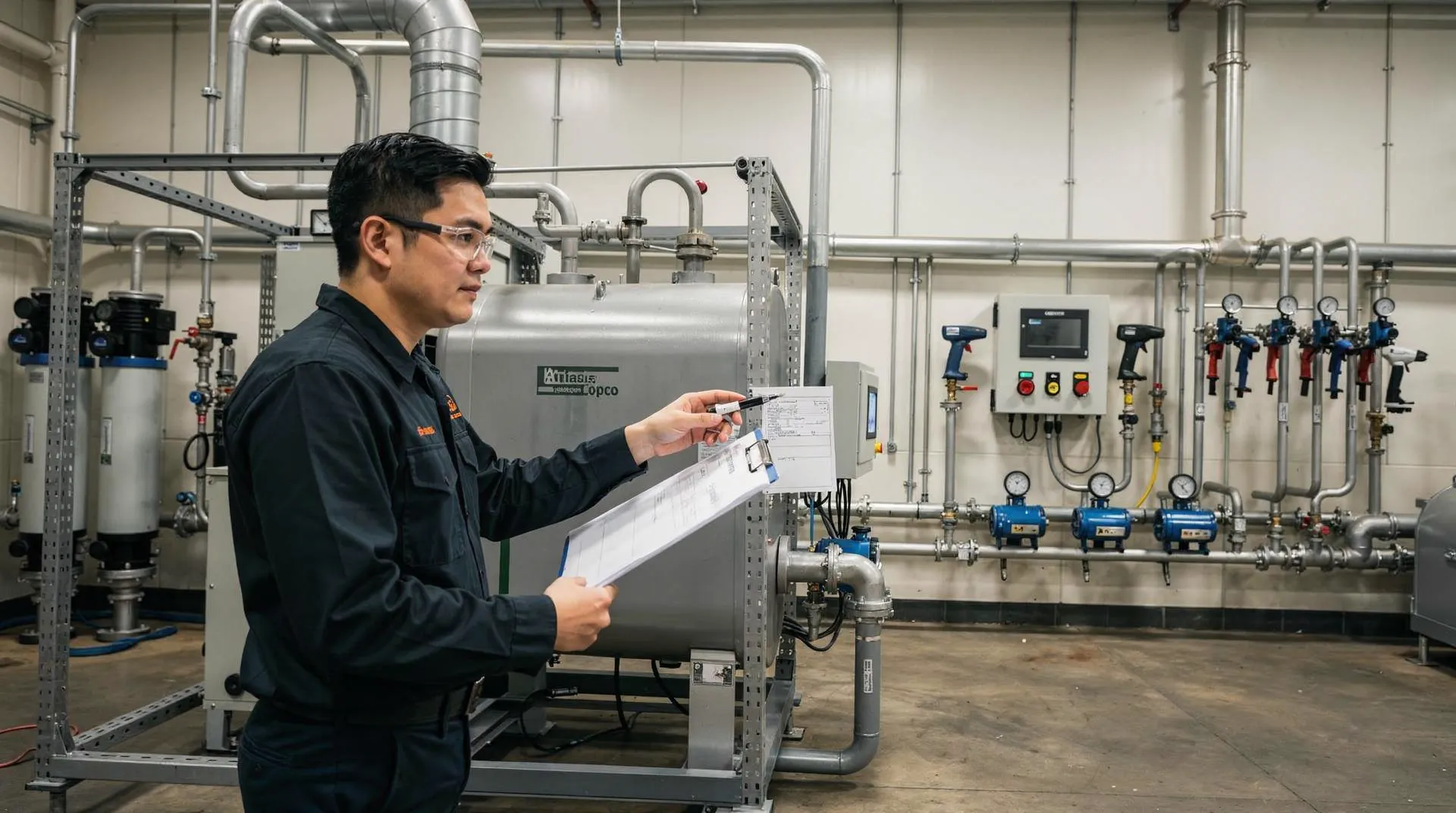
A structured audit checklist divides compressed air system evaluation into five distinct zones: Compressor Room, Air Treatment, Distribution Network, End-Use Points, and Energy Metering. Executing each zone in sequence prevents gaps that cause missed inefficiencies and unplanned downtime.
Follow these steps in order:
- Compressor Room — Measure inlet pressure, outlet pressure, and operating temperature. Compare every reading against the manufacturer’s specifications to confirm the compressor performs within its rated parameters.
- Air Treatment — Inspect air dryers and filtration components. Moisture that bypasses dryers degrades equipment performance and accelerates internal corrosion, making this zone a high-priority stop on any efficiency review.
- Distribution Network — Conduct a leak detection sweep across all fittings, joints, and pipe runs. Undetected leaks can cost a facility significantly over the course of a year — and most plants carry multiple such leaks simultaneously.
- End-Use Points — Verify that tools, actuators, and process equipment operate at the correct pressure. Oversupply wastes energy; undersupply disrupts production.
- Energy Metering — Record flow rates, power draw, and run hours to establish a baseline for ongoing system assessment and future comparisons.
What Should Technicians Check During the Air Treatment Zone?
Technicians must confirm that air dryers are sized correctly for the system’s demand profile. Moisture-related failures reduce equipment efficiency and shorten service life. dryer condition and dew-point performance require direct measurement, not visual inspection alone.
How Does CED Compressed Air Support a Full System Audit?
CED Compressed Air’s service portfolio includes preventative maintenance, air energy audits. Offsite monitoring capabilities that map directly onto each of the five audit zones. Clients working with CED gain access to trained technicians who execute every zone step with calibrated instruments and documented findings.
What Common Mistakes Undermine Your Audit Results?
Skipping a structured audit checklist is the single most damaging error facilities make. Most industrial plants waste up to 50% of every cubic foot of compressed air generated. A loss that a repeatable, documented framework directly prevents.
The most common audit errors fall into three categories:
- Omitting baseline measurements before the efficiency review begins, leaving no reference point for improvement.
- Ignoring leak detection during the system assessment, which allows pressure drops and equipment inefficiency to persist undetected.
- Failing to document maintenance history, making it impossible to identify recurring failure patterns.
Why Does an Incomplete Efficiency Review Cost So Much?
Compressed air accounts for roughly 10% of all electricity consumed in industrial facilities. Half of that energy disappears through leaks, pressure drops, and inefficient equipment losses that an incomplete review never captures.
How Does Experience Reduce Audit Errors?
CED Compressed Air has delivered compressed air solutions and systems analysis across Ontario since 1986. That depth of field experience helps facilities avoid the procedural gaps that turn a promising audit into an inconclusive report.
A comprehensive compressed air system audit checklist serves as your foundation for operational excellence and cost efficiency. By systematically evaluating equipment performance, energy consumption. Maintenance protocols, you identify opportunities to optimize your system’s reliability and reduce unnecessary expenses. CED Compressed Air Inc. brings three decades of industry expertise to guide you through this critical assessment, ensuring your compressed air infrastructure supports your business objectives while delivering the performance your operations demand.
FAQ
What percentage of compressed air is typically wasted in industrial facilities?
Facilities waste up to 50% of every cubic foot of compressed air generated through leaks, pressure drops, and equipment inefficiency.
What components does a compressed air system audit checklist cover?
A compressed air system audit checklist covers compressors, dryers, filters, storage tanks, leak detection, pressure drop analysis, and energy efficiency review.
Does CED Compressed Air Inc. offer professional audit support?
CED Compressed Air Inc. provides systems analysis services from Oshawa, Ontario, giving facilities a structured starting point to identify and eliminate compressed air losses.